If you live in Clinton, NJ and are planning a garage door installation, safety should be top of mind from the first measurement to the final test. Proper garage door installation reduces injury risk, protects property, and ensures long-term performance. This guide lays out practical steps homeowners can use to improve safety when installing new garage doors or replacing old equipment.
Plan before you buy or schedule
Start by choosing the right product and installer. A safe garage door installation begins with correct sizing and compatible hardware. Select doors rated for residential service and compatible with your garage’s headroom and framing.
Before you sign anything, ask for proof of insurance and references. If you want local tips and case studies, check our blog for installation stories and safety checklists specific to area homes.
Measure, check structure, and verify clearances
- Measure the opening twice and confirm the header strength. Weak frames need reinforcement before a full garage door installation.
- Verify headroom, backroom, and side clearance. Incorrect clearances lead to unsafe track alignment or halted installations.
- Look for signs of water damage or rot in the jambs; repair those before installing new tracks or springs.
Follow code, permit, and weather considerations in Clinton
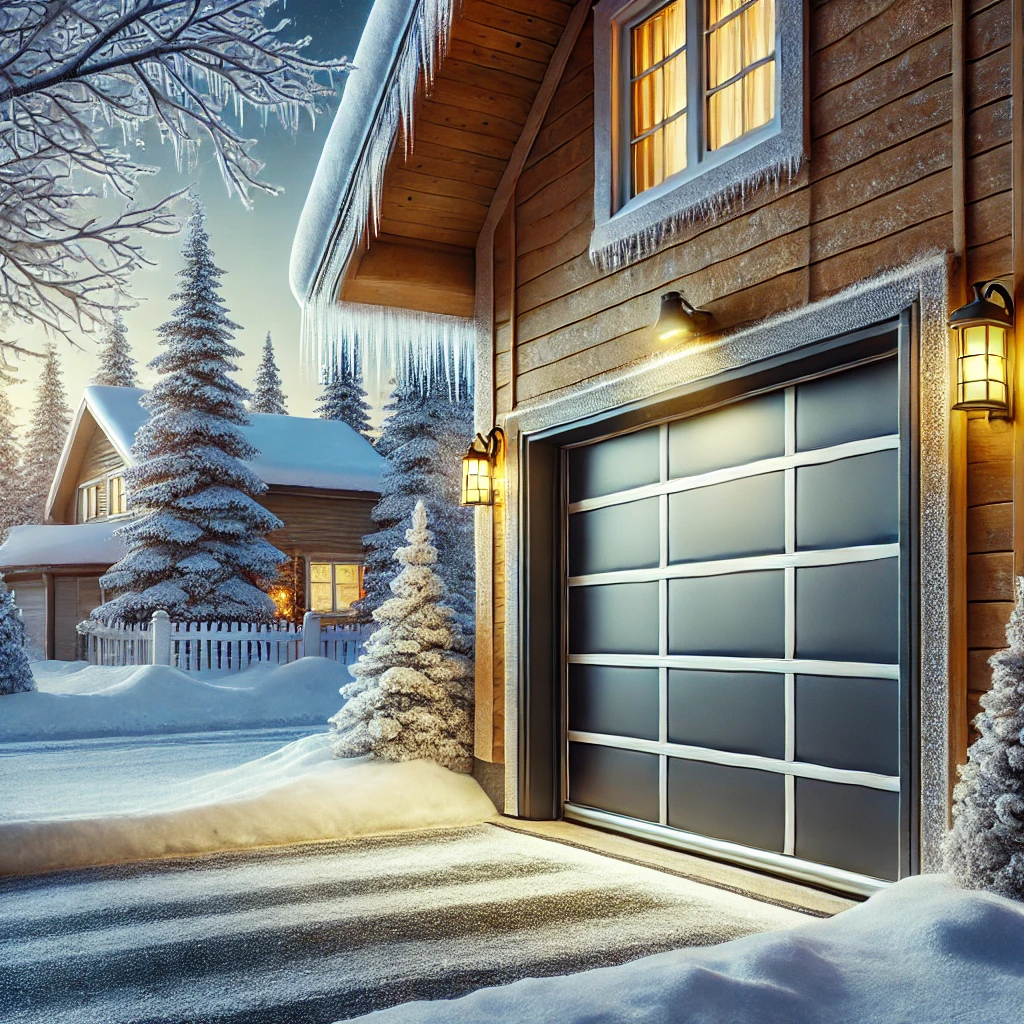
Local codes and weather in Hunterdon County affect safe garage door installation. Cold months and heavy snow can change material handling and installation timing.
Permits and local inspections
Many Clinton homeowners overlook permits. Check with the Borough of Clinton building department or your contractor to determine if a permit or inspection is required for your garage door installation—especially when modifying framing or electrical wiring for an opener.
Weather-related safety steps
- Avoid installing torsion springs in freezing temperatures if possible; brittle components and reduced grip increase risk.
- Plan for staged deliveries. If a storm is forecast, keep parts sheltered to prevent water damage that complicates safe installation.
- Use anti-slip mats and clear snow/ice from the driveway to provide stable footing for technicians and homeowners.
Safe practices during garage door installation
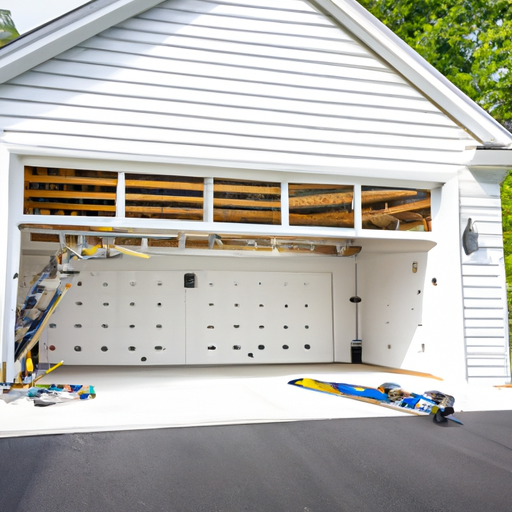
On the day of installation, both homeowners and technicians should follow clear safety protocols. Professional installers use tools and techniques designed to control high-tension parts, but you can help reduce risk.
Control the jobsite
- Keep children and pets away from the garage while work is underway.
- Clear the area of vehicles and loose items so installers have unobstructed space to operate ladders and hoists.
- Request that installers use wheel chocks on any vehicle left nearby and secure the work area with temporary barriers if required.
Tools, training, and springs
Torsion springs store enormous energy. A safe garage door installation always uses properly rated springs and the correct winding bars. Never let an untrained person attempt spring adjustments. If you see unsafe practices, pause the job and call the crew supervisor or our office to report concerns.
For complex installs—like those involving high-lift tracks, heavy insulated panels, or custom hardware—hire trained technicians who regularly perform residential garage door installation with documented safety training and proper equipment.
Post-install checks and maintenance to extend safety
After the garage door installation is complete, there are routine checks that every Clinton homeowner should perform to preserve safety and function.
- Test auto-reverse and photo-eye sensors daily for the first week, and monthly thereafter.
- Inspect cables, rollers, and hardware for wear; lubricate moving parts per the manufacturer’s guidance.
- Keep a maintenance log with dates and the technician names—this helps with warranty claims and future service.
If you prefer professional maintenance after installation, our services include timed checks and emergency repairs tailored to New Jersey weather and residential needs.
Teach household safety habits
- Show family members how to operate the manual release and where to find keypad codes or remote controls.
- Advise children not to play near the door or its sensors, and explain the dangers of DIY spring work.
- Store winding bars and tools in a locked area to prevent accidental misuse.
When to call a pro—and what to expect
Even with careful planning, some jobs require professional experience. If your garage has had previous structural damage, unique framing, or you plan to upgrade to a heavier insulated door, call a qualified installer.
During a typical garage door installation, expect a safety briefing, clear workspace setup, and a final functional test. Good contractors will leave a written checklist and warranty information on the job file.
Ready to book a safety-focused install or ask a question? Contact our team directly to discuss specifics for Clinton properties and to request a site visit. Use our convenient contact form or call to get a clear estimate.
Proper garage door installation protects your family and home value. By planning ahead, following local permit rules, and hiring trained professionals for high-tension tasks, Clinton homeowners can reduce risk and enjoy reliable operation for years.
Helpful local resources in Clinton, NJ
- Garage Door Repair Hoboken
- Garage Door Repair Montclair
- Garage Door Repair Westfield
- Garage Door Repair Summit
- Garage Door Repair Maplewood
- Garage Door Repair Livingston
- Garage Door Repair Short Hills
- Garage Door Repair Princeton
- Garage Door Repair Red Bank
- Garage Door Repair Morristown
- Garage Door Repair Chatham
- Garage Door Repair Mendham
- Garage Door Repair Bernardsville
- Garage Door Repair Bedminster
- Garage Door Repair Clinton
- Garage Door Repair Tenafly
- Garage Door Repair Ridgewood
- Garage Door Repair Upper Saddle River
- Garage Door Repair Wyckoff
- Garage Door Repair Basking Ridge
- Garage Door Repair South Orange
- Garage Door Repair Teaneck
- Garage Door Repair Fort Lee
- Garage Door Repair East Brunswick
- Garage Door Repair Montvale
- Garage Door Repair Haddonfield
- Garage Door Repair Marlboro
- Garage Door Repair Cranford
- Garage Door Repair Voorhees
- Garage Door Repair North Caldwell
Frequently Asked Questions
Q: Does Clinton, NJ require a permit for a garage door installation?
A: Permitting rules vary by project. Simple door replacement that does not alter framing or electrical may not need a permit, but structural changes or new openers often do. Contact the Borough of Clinton building department or your contractor before work begins.
Q: How long does a typical residential garage door installation take?
A: Most standard residential installations take 4–8 hours from removal to test. Larger sectional or custom doors can take a full day. If framing or electrical work is needed, plan for additional time and possible inspections.
Q: What are typical price ranges for garage door installation in the area?
A: Price varies with door type, insulation, hardware, and labor. Many homeowners in our region see ranges from several hundred to a few thousand dollars. Ask for a written estimate that breaks out parts, labor, and permits so you can compare apples to apples.
Q: Do garage door warranties cover installation errors?
A: Manufacturer warranties usually cover defects in panels and hardware, not installation. Reputable installers offer labor warranties—get those terms in writing and retain invoices and warranty cards for future claims.
Q: How does New Jersey weather affect safety after installation?
A: Humidity, temperature swings, and winter road salt can affect components like rollers and tracks. Regular lubrication, sensor checks, and an annual safety inspection will keep your door operating safely through seasonal weather.
Helpful local resources in Clinton, NJ
- Garage Door Repair Hoboken
- Garage Door Repair Montclair
- Garage Door Repair Westfield
- Garage Door Repair Summit
- Garage Door Repair Maplewood
- Garage Door Repair Livingston
- Garage Door Repair Short Hills
- Garage Door Repair Princeton
- Garage Door Repair Red Bank
- Garage Door Repair Morristown
- Garage Door Repair Chatham
- Garage Door Repair Mendham
- Garage Door Repair Bernardsville
- Garage Door Repair Bedminster
- Garage Door Repair Clinton
- Garage Door Repair Tenafly
- Garage Door Repair Ridgewood
- Garage Door Repair Upper Saddle River
- Garage Door Repair Wyckoff
- Garage Door Repair Basking Ridge
- Garage Door Repair South Orange
- Garage Door Repair Teaneck
- Garage Door Repair Fort Lee
- Garage Door Repair East Brunswick
- Garage Door Repair Montvale
- Garage Door Repair Haddonfield
- Garage Door Repair Marlboro
- Garage Door Repair Cranford
- Garage Door Repair Voorhees
- Garage Door Repair North Caldwell